mushy — the u is a smiling upside-down button mushroomTHE MUSHROOM HANDBOOK
WILD SAFETY / Omphalotus nidiformis

Ghost fungus — poisonous

Growing in a cluster on wood does not make an unknown fungus a culinary oyster.

May have eaten a wild mushroom?

Australia: call Poisons Information on 13 11 26 immediately. Do not wait for symptoms. In an emergency call 000. Elsewhere, contact your local poison or emergency service.

What to do now
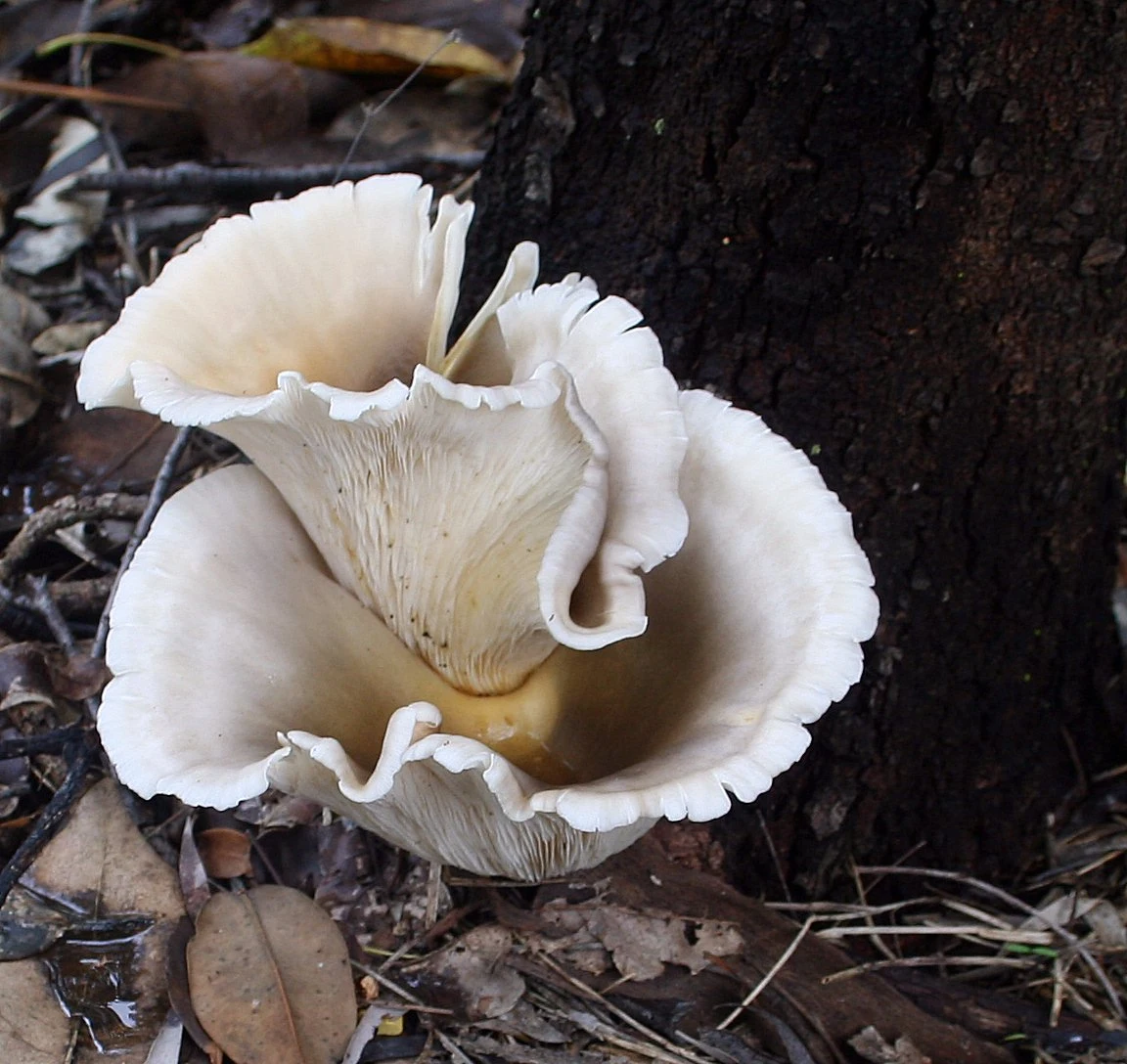
Documented photograph: Omphalotus nidiformis
Omphalotus nidiformis. Omphalotus nidiformis on Hakea salicifolia stump, Binnamittalong reserve, Bexley NSW
Cas Liber / CC BY-SA 2.5 · Resized, no crop. Licence
RISK AWARENESS ONLY

Poisonous; confused with oyster mushrooms

A named reference photograph cannot establish that a different specimen is safe. Do not taste an unknown fungus or use this page as a picking checklist.

Read the safety myths

A documented confusion

Royal Botanic Gardens Victoria records confusion between ghost fungus and oyster mushrooms. The practical lesson is that a recognisable growth shape cannot settle the food-safety question.

Keep the cooking context separate

An oyster recipe assumes an ingredient purchased as food or a known cultivated harvest. It is not an invitation to use a wild cluster that looks similar. A photograph on this website cannot establish what is growing on a nearby tree.

Enjoy the observation

Photograph the whole setting and leave the fungus in place. Record its location and shape if you are learning about local fungi. A successful observation can end with an interesting image rather than a collection for dinner.

Sources & further reading

Source links support background facts; they do not imply endorsement of Mushy. Last editorial update: 20 October 2026.

Keep dinner separate from wild observations