
Prepare it
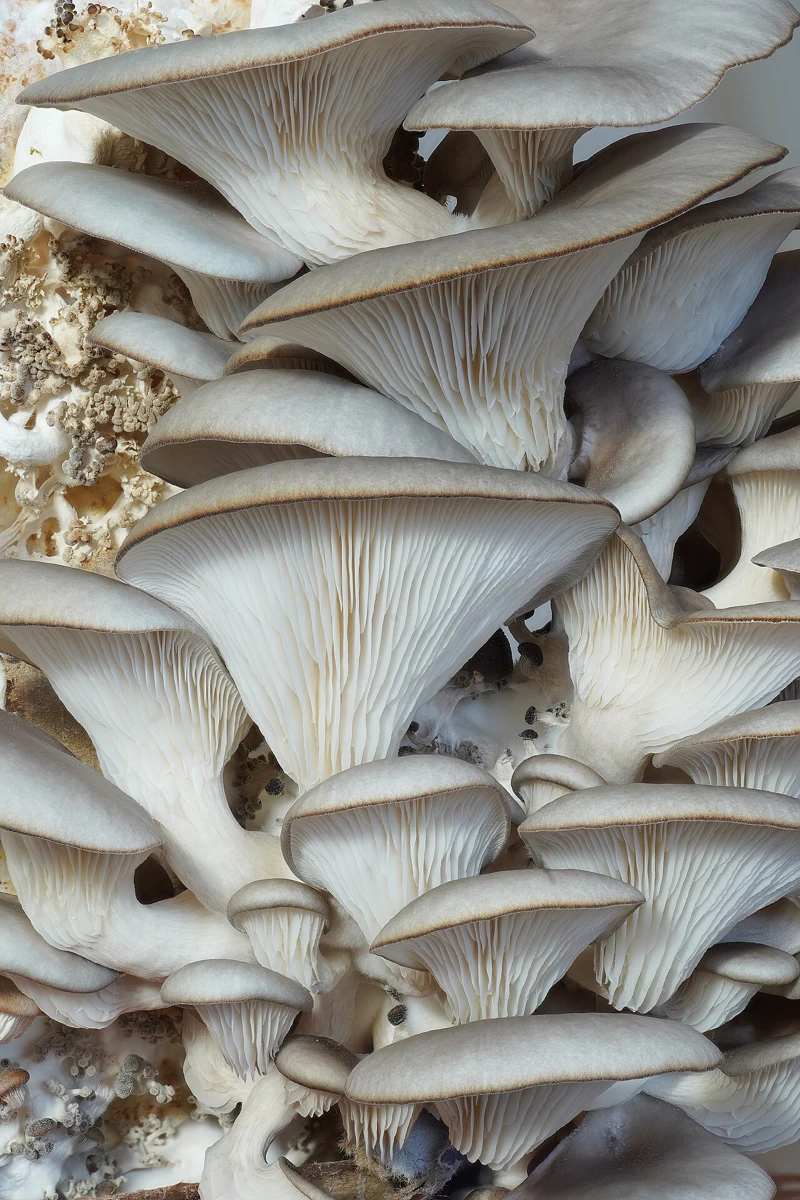
Separate the cluster and remove the tough connecting base. Tear the caps into similar pieces. Colour names may describe different species or strains, so do not assume every oyster kit has identical growing instructions.
Cook for the right texture
Use a loose layer in a hot pan for browned edges. Thin caps cook differently from the dense cluster base, which is why trimming matters. Add sauce after some browning when you want distinct pieces rather than a soft braise.
At the shop
Handle fragile clusters gently and plan to use them promptly. Choose commercially supplied food or a known cultivated harvest. A wood-growing wild cluster that looks similar is not a substitute.
Thinking of growing it?
A labelled ready-to-fruit oyster block is a practical first growing project. Match the strain’s temperature and moisture instructions. Do not use a photograph of the harvest to certify an unrelated wild find.
Sources & further reading
Source links support background facts; they do not imply endorsement of Mushy. Last editorial update: 20 October 2026.